

September is a time when lingering summer heat remains, but you can gradually begin to feel the signs of autumn. Kyoto's scenery also slowly takes on autumn colors, making it a great season for walking around all day.
This time, we will introduce 10 recommended sightseeing spots and 4 festivals in Kyoto for this September. Please use this as a reference for your Kyoto sightseeing.
>>For Kimono Rental in Kyoto, visit wargo
Fushimi Inari Taisha | The Senbon Torii Gates with Morning Sunlight are Recommended


Fushimi Inari Taisha is a large shrine located in Fushimi Ward, Kyoto. It is famous for its Senbon Torii (thousand torii gates), which form a tunnel-like path stretching for about 4 km, attracting many worshippers from Japan and overseas.
Early morning is the best time to visit, and walking through the torii gates with the morning sun streaming through is a wonderful feeling. There are fewer people, allowing you to calmly look around and pay your respects. Be sure to wake up early and visit.
If You Miss the Early Morning, Head for the Evening Illuminations


If you cannot visit Fushimi Inari Taisha in the early morning, it is recommended to visit after sunset when the shrine is illuminated. Inside the Senbon Torii gates, lanterns line the ground and are lit up, allowing you to immerse yourself in a fantastical world.
Although Fushimi Inari Taisha requires a lot of walking, fashion-first outfits are completely fine here. If you want to aim for even more photogenic shots, wearing traditional Japanese attire is also recommended.
Information on Fushimi Inari Taisha (Business Hours, Fees, etc.)
Address: 68 Fukakusa Yabunouchicho, Fushimi-ku, Kyoto City, Kyoto Prefecture
Access: Right outside JR Inari Station
Visiting Hours: 24 hours
Admission Fee: Free
Official Website: http://inari.jp/
■ Early morning is the best
I rented a bicycle at the hotel and headed to Fushimi Inari Taisha early in the morning. Being in the 8 AM hour, it was surprisingly empty, and I could leisurely visit both the Senbon Torii and the main hall.
■ The breathtaking Senbon Torii
The Senbon Torii gates are truly breathtaking. The path continuing like a tunnel makes you gasp in amazement. The "Omokaru Stone" located along the approach was a lot of fun, with various people trying it out.
Kiyomizu-dera Temple | The Approach to Kiyomizu-dera is Also Fun

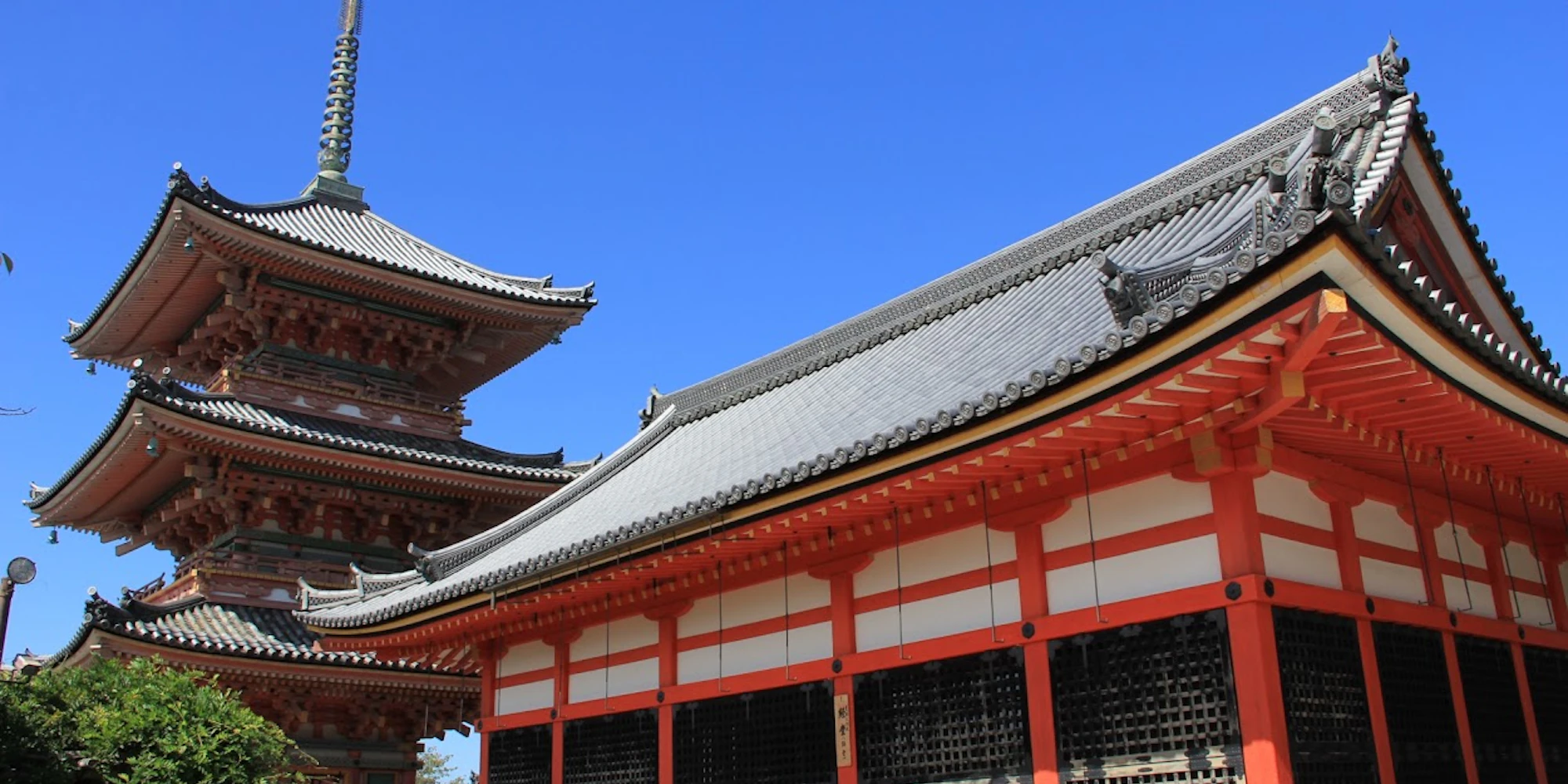
Kiyomizu-dera Temple is a well-known landmark in Kyoto. It is so famous in Japan that there is even a Japanese idiom equivalent to "taking a leap of faith" (literally, "jumping off the stage at Kiyomizu"). The Kiyomizu stage, situated high up, is famous as one of Kyoto's premier scenic spots.
There are many fun places along the approach to Kiyomizu-dera. When heading to Kiyomizu-dera in September, please enjoy the shops and scenery along the way to your destination.
Experience Nature from the Mid-slope of Mt. Otowa


Kiyomizu-dera is located on the mid-slope of Mt. Otowa, and because of its high elevation, it is known for its great views. Not only can you look out over the town of Kyoto, but you can also enjoy a panoramic view of the rich surrounding nature, making it a top scenic spot. Be sure to savor the scenery of the mountains as summer comes to an end.
Because Kiyomizu-dera is located in the mountains and has a large grounds area, clothing that is easy to move in is recommended. While you can get close by using buses and other transport, you will do a lot of walking just during the visit, so walking shoes are best.
Information on Kiyomizu-dera Temple (Business Hours, Fees, etc.)
Address: 1-294 Kiyomizu, Higashiyama-ku, Kyoto City, Kyoto Prefecture
Access: About a 15-minute walk from the Gojozaka or Kiyomizumichi bus stop
Visiting Hours: 6:00 - 18:00
Admission Fee: Adults 400 yen
Official Website: http://www.kiyomizudera.or.jp/
■ Breathtaking autumn scenery
The autumn view from Kiyomizu-dera is something I want to see every year! It was extremely crowded this year, but the scenery was so beautiful that it made me forget all about the crowds! I'm going again next year!
■ A must-visit if you come to Kyoto.
Kiyomizu-dera, famous for its stage. When I came before, it was always during renovation work, but this time I visited when there was no renovation work. I was finally able to see the full view of Kiyomizu-dera. Although it was early autumn, the lingering summer heat still continued, and it was a bit early for fall foliage, but I am satisfied!
Kinkaku-ji Temple | A Uniquely Beautiful Appearance


Kinkaku-ji Temple is a popular sightseeing spot from both Japan and abroad. Its uniquely beautiful appearance captivates many people, and tourists visit constantly.
Kinkaku-ji is built as if floating on a pond, and of its three stories, the top two stories shine in gold. Registered as a World Heritage site, Kinkaku-ji is truly a Japanese treasure and a place you definitely want to stop by when visiting Kyoto.
Autumn Kinkaku-ji Where Even the Surroundings Turn Golden


Trees with autumn leaves and yellow leaves grow around Kinkaku-ji. Therefore, in autumn, they gradually change color, creating a beautiful contrast with Kinkaku-ji. Especially when the yellow leaves begin, you can see scenery where the surroundings, including Kinkaku-ji, shine like gold, so autumn Kinkaku-ji is something you should see at least once.
Kinkaku-ji is a place where you can stroll and visit leisurely, so your choice of clothing is completely fine. However, avoid overly flashy or unclean items that would ruin the scenery.
Information on Kinkaku-ji Temple (Business Hours, Fees, etc.)
Address: 1 Kinkakujicho, Kita-ku, Kyoto City, Kyoto Prefecture
Access: 8-minute walk from Kinkakujimichi bus stop
Visiting Hours: 9:00 - 17:00
Admission Fee: Adults 400 yen, elementary and junior high school students 300 yen
Official Website: https://www.shokoku-ji.jp/kinkakuji/
■ To Kinkaku-ji on a sunny autumn day
On a clear autumn day, I went to Kinkaku-ji for the first time in a while as a walk. Kinkaku-ji shining brilliantly in the autumn sunlight was wonderful.
■ Before the autumn foliage season
I went to Kinkaku-ji before the full-scale autumn foliage season started. It wasn't too crowded yet, so I was able to look around leisurely. Once the foliage season arrives, it overflows with tourists from Japan and abroad, making it quite restless.
Togetsukyo Bridge | A Nature-Filled Place to Enjoy Spectacular Views All Year Round


Togetsukyo Bridge in Arashiyama is a popular sightseeing spot where you can enjoy spectacular views at any time throughout the year. You can enjoy the great nature of the four seasons while taking a leisurely stroll across Togetsukyo Bridge, which spans the Katsura River surrounded by mountains.
Take a relaxing stroll through spaces filled with traditional Japanese atmosphere: cherry blossoms in spring, fresh greenery in summer, autumn leaves in winter, and snow in winter. September is a transitional period from summer to autumn, so depending on the timing, you might see the gradient of trees starting to change color.
There are Many Sightseeing Spots Around Togetsukyo Bridge!


There are many sightseeing spots gathered around Togetsukyo Bridge. With numerous places like roofed pleasure boats and stone statues to create travel memories, please look for them while walking. Additionally, there are restaurants and souvenir shops, so you can enjoy shopping and dining.
Since you can walk and rest leisurely around Togetsukyo Bridge and its surroundings, your favorite clothing is fine. Many people choose to wear kimonos since it is the Arashiyama area, after all.
Information on Togetsukyo Bridge (Business Hours, Fees, etc.)
Address: 1-5 Saga-Tenryuji-Minaminobabacho, Ukyo-ku, Kyoto City, Kyoto Prefecture
Access: 13-minute walk from Saga-Arashiyama Station
Visiting Hours: 24 hours
Admission Fee: Free
Official Website: https://ja.kyoto.travel/tourism/single01.php?category_id=8&tourism_id=2682
■ In a kimono with a friend
I went to Arashiyama, Kyoto, and since it's a special occasion, my friend and I dressed in kimonos to look around. After crossing Togetsukyo Bridge, we rented a private roofed pleasure boat nearby and went for a ride. It felt like a special trip and was very exciting!
■ Relaxing in Arashiyama
To Kyoto Arashiyama. We spent a relaxing time searching for stylish cafes to rest and enjoying the view from Togetsukyo Bridge.
Kifune Shrine | The Head Shrine of Water Deities, Also Popular as a Power Spot


Kifune Shrine is the head shrine of water deities, of which there are 2,000 shrines across the country. Walking up the stairs lined with lanterns brings you into the shrine grounds, where the magnificent buildings will take your breath away.
Popular as a power spot, Kifune Shrine is a shrine where you can truly feel the rich water and its power, living up to its dedication to water deities. Spend a quiet time listening to the surrounding trees and the sound of water.
The Four Seasons of Nature Together with Water


Kifune Shrine is an old shrine quietly nestled among nature. In such a peaceful space where you can hear water flowing over rocks, the rustling of tree leaves, and bird calls, you can feel the air and scenery of the four seasons with your whole body. September is also a season to experience a different atmosphere from midsummer or autumn.
Although Kifune Shrine is located in a place resembling a forest, buses run very close by, so there is no need to walk through rough terrain. Clothing that is not too casual, clean, and not too flashy is best.
Information on Kifune Shrine (Business Hours, Fees, etc.)
Address: 180 Kurama-Kibunecho, Sakyo-ku, Kyoto City, Kyoto Prefecture
Access: 4-minute walk from Kibune bus stop
Visiting Hours: 6:00 - 18:00
Admission Fee: Free
Official Website: https://kifunejinja.jp/
■ Quite a photogenic spot
The lantern-lined staircase is quite a photogenic spot. Some people even set up tripods to take pictures. It still feels like the autumn leaves are far off, but since it is originally a place with beautiful greenery, you can feel the beauty and strength of nature whenever you go.
■ Be sure to dress warmly on chilly days
If you are going on a slightly chilly day around autumn, you might want to dress a bit warmly. Perhaps due to the crisp air, it feels much cooler here than in other places.
Yasaka Koshin-do Temple | The Shrine of Koshin-san and Monkeys


Yasaka Koshin-do Temple, officially named "Daikokuzan Kongo-ji Koshin-do," is one of the Tendai sect temples.
It is a shrine dedicated to "Koshin-san," and its characteristic feature is that it is filled with motifs of monkeys, which are considered divine messengers. Recently, it has also become famous as a place to take Instagram-worthy photos.
Colorful and Cute "Kukuri-zaru"


When it comes to Yasaka Koshin-do, the famous sights are the "Kukuri-zaru" densely dedicated all over the temple grounds.
These are colorful and cute amulets featuring motifs of monkeys whose hands and feet are tied, making them unable to move freely according to their desires. It is said that if you write a wish on one and restrain one desire, your wish will come true.
There are no particularly strict rules or manners regarding clothing when visiting Yasaka Koshin-do; your favorite fashion is fine. Excessively exposed or flashy clothing that might bother other worshippers is a no-go, but items within basic manners should be fine.
Information on Yasaka Koshin-do Temple (Business Hours, Fees, etc.)
Address: 390 Kan'oncho, Higashiyama-ku, Kyoto City
Access: Right outside the Kyoto City Bus Kiyomizumichi stop
Visiting Hours: 9:00 - 17:00
Admission Fee: Free
Official Website: http://www.yasakakousinndou.sakura.ne.jp/
■ To Yasaka Koshin-do, an Instagram-worthy spot
The grounds are not very large, but thanks to that, the density of the Kukuri-zaru is even higher. It is a one-of-a-kind shrine where you can take colorful, striking photos that look great on Instagram!
■ Making a wish on a Kukuri-zaru
I visited Yasaka Koshin-do, which has become a popular sightseeing area in Kyoto. Many people were making wishes on the Kukuri-zaru, and I made one too. I like that it's not just making a wish and leaving it at that, but rather restraining one desire.
Shoju-in Temple | A Temple Full of Cute Things!?


Shoju-in Temple is a must-see Kyoto temple for lovers of cute things. With 160 ceiling paintings, a thousand wind chimes, and heart-shaped Inome windows, it is a cute temple with many artistic elements and is known for being highly popular among women.
While feeling the traditional Japanese atmosphere, it has become a popular sightseeing spot because of its uniquely scattered cuteness.
Let's Find the Cute Jizo Statues


While the previously introduced items are famous photo spots, what we definitely want you to look for when visiting Shoju-in is the Jizo statues.
Shoju-in features adorable Jizo statues with gentle smiles, and finding them will calm your heart and naturally bring a smile to your face.
Since Shoju-in is a temple where you can walk both indoors and outdoors, footwear that can be easily put on and taken off is recommended. Time-consuming lace-up shoes or long boots can cause congestion, so please refrain from wearing them.
Information on Shoju-in Temple (Business Hours, Fees, etc.)
Address: 149 Okuyamada Kawakami, Ujitawara-cho, Tsuzuki-gun, Kyoto Prefecture
Access: Direct taxi available from Kyoto Station (MK Taxi / reservation required)
Visiting Hours: 9:00 - 16:30 (9:00 - 16:00 from November to March)
Admission Fee: 600 yen
Official Website: https://shoujuin.boo.jp/
■ There is a temple with the same name... Be careful!
When I entered Shoju-in into the navigation system, it took me to a different Shoju-in, causing a detour. Aim for Shoju-in in Uji City! Many people were visiting, so it was quite difficult to take photos without people in them.
■ The Inome Window Colored by the Seasons
Shoju-in's Inome window is famous as a heart-shaped window. The outside scenery changes depending on the season, so the color of the heart seems to change with the timing, which is interesting.
Philosopher's Path | A Strolling Spot Along the Canal for Autumn Foliage Hunting


The Philosopher's Path refers to a walking path of about 1.5 km located in Sakyo Ward. Running along the Lake Biwa Sosui Branch Canal, it is a highly popular spot for strolling and sightseeing.
Because the Philosopher's Path is lined with autumn foliage spots such as Ginkaku-ji, Eikan-do, and Nanzen-ji, you can enjoy hunting for autumn leaves in Kyoto while taking a stroll. However, given recent trends, September might still feature lingering summer scenery.
Morning Strolls and Visiting Shops are Also Recommended!
[[[end]]]


If you are going to the Philosopher's Path, the early morning when the sun rises or the time when shops start opening is recommended.
Morning Walks and Store Hopping Are Also Recommended!
If you are going to the Philosopher's Path, it is recommended to visit either early in the morning when the sun rises or around the time when the shops start opening.
Along the Philosopher's Path illuminated by the morning sun, you can see beautiful scenery where the trees sparkle brilliantly. Also, since it is a path lined with stylish places like cafes, visiting when the shops begin to open allows you to enjoy cafe hopping while avoiding crowds.
Known as a great walking spot, the Philosopher's Path is easy to walk, so you are fine wearing whatever fashion you like. You can wear your favorite clothes, or perhaps wear a kimono to match the vibe of Kyoto.
Information on Business Hours and Fees for the Philosopher's Path
Address: Tetsugaku-no-Michi, Shishigatani Nishiteranomae-cho, Sakyo-ku, Kyoto-shi, Kyoto
Access: Right in front of the City Bus "Ginkakuji-mae" or "Nanzenji Eikando-mae" stop
Official Website: https://tetsugakunomichi.jp/
■ Strolling with the feeling of a philosopher
The Philosopher's Path is said to be named after the philosopher Kitaro Nishida, who used to walk along it every morning while deep in thought. Walking down this path with the mindset of a philosopher, pondering various things, turned out to be a wonderful time.
■ Selected as one of Japan's Top 100 Roads!
I walked along the Philosopher's Path, which has been selected as one of Japan's Top 100 Roads. It is a path lined with famous tourist spots and tends to be crowded during the day. It is recommended to aim for a time when there are fewer people and take a leisurely stroll.
Shimogamo Shrine | Feel the Four Seasons in Tadasu no Mori


Shimogamo Shrine, also known by the alternative name "Kamo Mioya Shrine," is a shrine famous for its blessings in matchmaking.
Many trees grow within the shrine grounds, and in "Tadasu no Mori," you can see beautiful autumn foliage, starting with maples, when autumn arrives. Since it is also a place wrapped in fresh greenery during the summer, you can savor the scenery of each of the four seasons.
600-Year-Old Giant Trees Are a Must-See


In Tadasu no Mori at Shimogamo Shrine, there are giant trees said to be as old as 600 years. Moreover, there are not just one or two giant trees, but hundreds of them. A forest of powerful giant trees is a place you will definitely want to visit at least once.
The paths within the Shimogamo Shrine grounds and from public transportation are easy to walk, so your clothing is fine as long as it does not ruin the scenery of the shrine. However, flat shoes will probably be easier for walking.
Information on Business Hours and Fees for Shimogamo Shrine
Address: 59 Shimogamo Izumikawa-cho, Sakyo-ku, Kyoto-shi, Kyoto
Access: Right in front of the City Bus "Shimogamo-jinja-mae" stop
Worship Hours: 10:00 - 16:00
Admission Fee: Free
Official Website: https://www.shimogamo-jinja.or.jp/
■ Visiting together with Kamigamo Shrine
I always make sure to visit together with Kamigamo Shrine. I was able to slowly pay my respects at the shrine while breathing in the air of the grove. Thank you as always... It is a beautiful shrine no matter when you come.
■ Pampas grass at the Maedono!
I went with my family at the end of September. Since the Kangensai Moon Viewing Festival happened to be taking place, pampas grass was decorated at the Maedono. It had a somehow special atmosphere and was enjoyable.
Bishamontdo Monzeki | A Monzeki Temple Enshrining the Seven Lucky Gods


Bishamondo Monzeki is a Monzeki temple of the Tendai sect. A Monzeki temple refers to a temple where members of the imperial family or aristocratic lineage served as chief priests after entering the priesthood, and it is known as a prestigious temple with deep ties to the Imperial Household since ancient times.
It is a Monzeki temple that enshrines the Seven Lucky Gods and is known as a popular temple visited by many tourists.
Bansuien Garden with Trees of Varying Heights is a Must-See


Bansuien Garden at Bishamondo Monzeki features many trees with differences in elevation, creating beautiful scenery in every season, such as fresh greenery and autumn foliage.
Even if it is not the peak season for autumn leaves, the beauty of the garden itself remains intact, so there will be plenty to see even in September.
Since Bishamondo Monzeki is a prestigious temple, it is safer to wear neat clothing and avoid flashy or overly revealing items. If you wear a kimono, komon or tsumugi patterns that are easy to sightsee in are totally fine.
Information on Business Hours and Fees for Bishamondo Monzeki
Address: 18 Yamashina Anshu Inariyama-cho, Kyoto-shi
Access: 20-minute walk from Yamashina Station
Worship Hours: 9:00 - 17:00
Admission Fee: Adults 500 yen, High school students 400 yen, Elementary school students 300 yen
Official Website: https://www.bishamon.or.jp/
■ It was still too early for autumn leaves
I went at the end of September, but it seemed a bit early for the autumn leaves... When they change color, it becomes a wonderful landscape covered in brilliant red. That being said, the garden is always a nice place that calms the mind whenever you look at it.
■ Cherry blossoms in spring, autumn leaves in autumn
Bishamonten is famous for weeping cherry blossoms in spring and autumn foliage in autumn. If you go during the peak of either, you can behold a breathtaking view. However, if you go out of season, you can view things leisurely without crowds... so I suppose that comes down to personal preference?
Festivals in Kyoto Held in September
Following the tourist spots, we will introduce festivals held in Kyoto in September. If the timing works out, please be sure to visit them.
Hassaku Festival


The Hassaku Festival held at Matsunoo Taisha is a festival tied to the first day of the lunar month. It has been held since the Meiji period to pray for an abundant autumn harvest.
There is also an eve festival the day before, gathering many people. The actual day is a fun festival filled with great excitement, starting with dedicated sumo wrestling.
Season: First Sunday of September (Eve festival included)
Location: Matsunoo Taisha
Access: Right by the Matsunoo Taisha-mae bus stop
Reference: https://icotto.jp/presses/8768#A4
Kangetsusai (Moon Viewing Festival)


Kangetsusai is a festival to enjoy moon viewing in September. Held in various parts of Kyoto, it features tea ceremonies and concerts held while looking at the moon.
Let's thoroughly enjoy moon viewing by drinking tea and eating Japanese sweets while listening to the sounds of the koto and Japanese taiko drums, which make you feel traditional Japanese elegance.
Season: The day of the Mid-Autumn Full Moon
Location: Various locations in Kyoto
Seimei Festival


Seimei Shrine, built on the former residence site of Abe no Seimei—known as a legendary onmyoji—is visited by many worshippers every day.
The Seimei Festival is the autumn festival of Seimei Shrine, but it is famous as its most important ritual. It is conducted in a solemn atmosphere with events such as the welcoming lantern procession and the dedication of Yudate Kagura.
Season: Two days starting from the eve of the Vernal Equinox Day
Location: Seimei Shrine
Access: Right by the Ichijo Modoribashi / Seimei-jinja-mae bus stop
Okunomiya Shinko Festival
The Okunomiya Shinko Festival is the largest festival in southern Kyoto (Rakunan). Held over nine days, one of the highlights is the "Hanakasa Sanguu," where large and small flower umbrellas from various neighborhoods visit the shrine as welcoming lanterns on the first and eighth days.
It is a large festival with many participants, full of Kyoto's unique charm. Be sure to go and see what it's really like in person.
Season: Late September to early October
Location: Okunomiya Shrine
Access: Right by the Okunomiya-mae bus stop
Wear a Yukata or Kimono to Make Special Memories of Kyoto Sightseeing


September in Kyoto is a season where the heat still lingers. Although it is autumn on the calendar, a yukata is still fine. Kimonos, which match the scenery of shrines and temples very well, do not violate manners and are surprisingly comfortable.
If you are with friends or a partner, you will be able to create even more special memories.
At Kyoto Kimono Rental, we offer a wide variety of colors and patterns for both kimonos and yukatas. We will also help you choose obi sashes and assist with dressing, so why not take the opportunity of your Kyoto sightseeing trip to try out traditional Japanese attire?
Kyoto Kimono Rental Wargo Official
Conclusion


Kyoto is a town where Japanese culture and traditional charm remain deeply rooted. When sightseeing in such a Kyoto, you'll want to efficiently tour both classic and off-the-beaten-path spots.
Please use the spots introduced in this article as a reference to create a great sightseeing route.
In addition, kimonos and yukatas fit Kyoto sightseeing very well. Even for those who cannot dress themselves or do not own a kimono or yukata in the first place, you can rent them just for the day of your sightseeing.
If you are interested, why not give traditional Japanese attire a try at Kyoto Kimono Rental, where we can assist you from choosing a kimono to getting dressed?
